
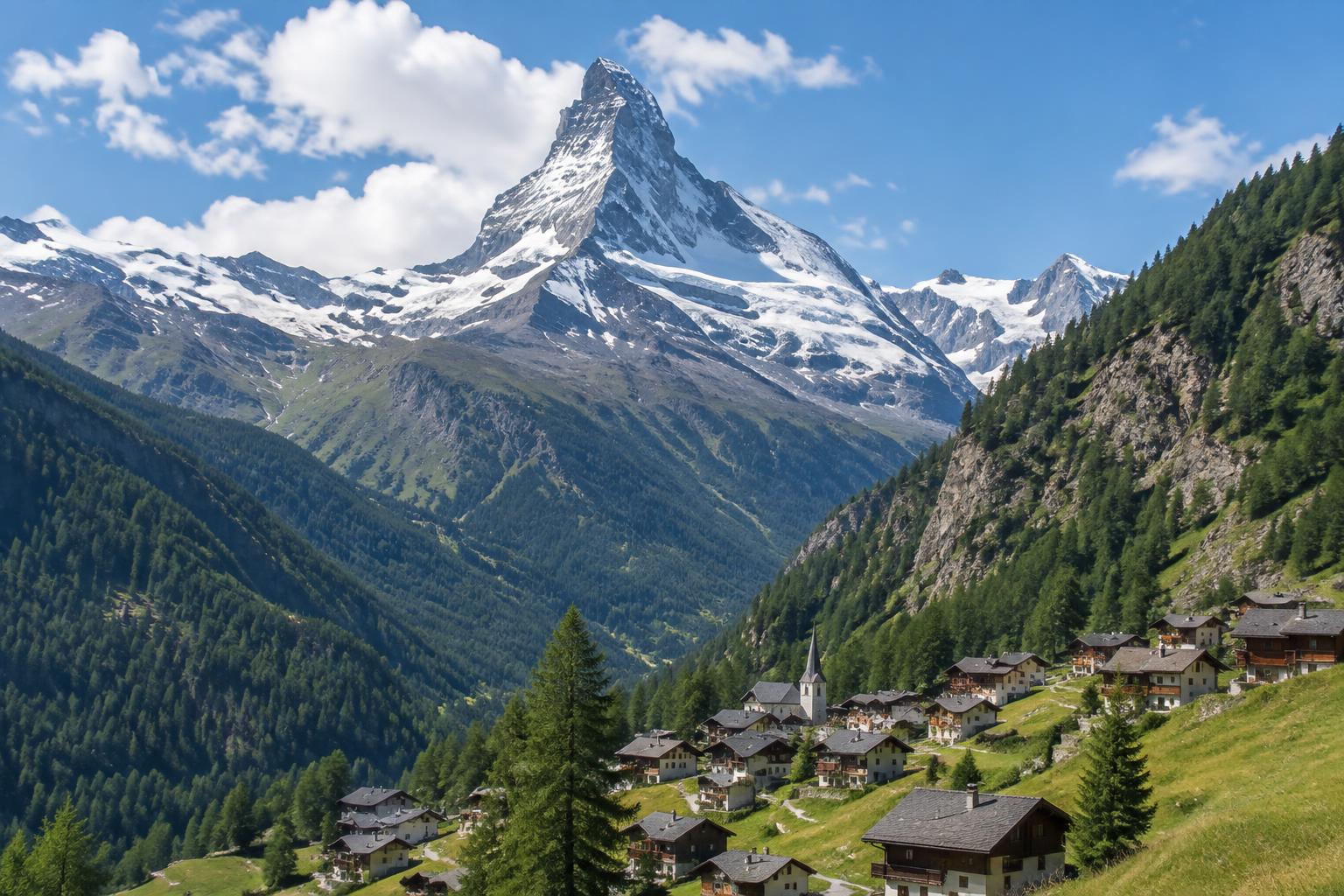
Swiss Alps, Switzerland
"Where alpine peaks touch the heavens"
Swiss Alps at a glance
- Best time to go
- Late June through mid-September is the main hiking season, when high-altitude trails, cable cars and mountain passes are fully open; some higher routes stay snow-covered into June, so early-season hikers should check trail conditions. Ski season generally runs from late November to April, varying by resort and altitude. Spring and late autumn are quieter but more limited, since some cable cars and trails are closed for maintenance between seasons.
- How long to stay
- We'd suggest seven to ten days to combine a couple of mountain bases (for example Interlaken or Grindelwald, plus Zermatt) with time for hiking or skiing and at least one scenic train journey.
- Who it's for
- Hikers, skiers and scenic-train enthusiasts who don't mind planning around a relatively short high-season window.
- Might not be for you if
- You're hoping to hike high-altitude trails in April or May. Many cable cars and higher routes stay closed until the snow clears, typically in June.
The Swiss Alps offer some of Europe's most breathtaking mountain scenery. From the iconic Matterhorn to the Jungfrau region, pristine alpine lakes, charming villages, and world-class skiing create an unforgettable mountain paradise.
Best Time to Visit
June to September for hiking, December to March for skiing
Jun – Sep (Summer)
Perfect hiking weather, alpine meadows in bloom, cable cars fully operational. Peak season with warm days.
Dec – Mar (Winter)
World-class skiing in Zermatt, St. Moritz, and Verbier. Magical snowy landscapes and Christmas markets.
Apr – May (Spring)
Fewer crowds, wildflowers emerging, but some mountain passes still closed.
Oct – Nov (Autumn)
Golden larches, harvest festivals, and vineyard walks in Lavaux. Quieter and atmospheric.
Getting Around
Switzerland has one of the world's best public transport systems, making car-free travel easy and scenic.
🚂 Swiss Travel Pass
Unlimited travel on trains, buses, and boats — the best way to explore. Covers scenic routes like the Glacier Express.
🚡 Cable Cars & Funiculars
Mountain transport is plentiful. Many are included with the Swiss Travel Pass or discounted.
🚗 Rental Car
Useful for remote valleys but parking is expensive and many villages are car-free.
🚌 PostBus
Yellow PostBuses reach even the most remote mountain villages on schedule.
💡 Buy the Swiss Travel Pass for 4+ days — it covers almost everything including lake boats and city trams.
Suggested Itineraries
Zürich to Lucerne
Land in Zürich, train to Lucerne, walk the Chapel Bridge and Old Town.
Mount Pilatus or Rigi
Golden Round Trip up Pilatus or cogwheel train up Rigi for the classic panorama.
Transfer to Interlaken
Scenic Luzern–Interlaken Express (2h), afternoon at Harder Kulm for the two-lakes view.
Jungfraujoch
Full day to the Top of Europe via Kleine Scheidegg.
Lauterbrunnen & Mürren
Valley of 72 waterfalls, cable car to car-free Mürren, Schilthorn if clear.
Transfer to Zermatt
Scenic train via Spiez and Visp, afternoon walk in car-free Zermatt with Matterhorn views.
Gornergrat & Departure
Morning cogwheel train to Gornergrat (3,089m), lunch with the Matterhorn, return to Zürich.
🍋 Not a race. Skip, swap, siesta — the world keeps spinning and you get to come back and finish the story.
Highlights
Must See
- Jungfraujoch
- Zermatt & Matterhorn
- Lake Lucerne
- Lauterbrunnen Valley
Local Cuisine
Insider Tip
The Swiss Travel Pass is worth every franc — unlimited trains, boats, and mountain discounts.
Swiss Alps travel questions, answered
When is the best time to hike in the Swiss Alps?
Late June through mid-September is the reliable window, when most high-altitude trails, cable cars and mountain passes are open. Early season (April to May) often still has snow blocking higher routes and closed cable cars, so if you're set on a specific trail, check current conditions before booking rather than assuming it will be open.
When is ski season in the Swiss Alps?
Generally late November through April, though exact dates vary by resort and altitude; higher glacier resorts can extend the season further. Major resorts like Zermatt, St Moritz and Verbier are well known for reliable snow across a long season.
What's the best way to get around the Swiss Alps without a car?
Switzerland's train network is extensive and reaches deep into the mountains, often paired with connecting cable cars, funiculars and postal buses. A Swiss Travel Pass, covering trains, buses and boats nationwide, is worth comparing against individual tickets if you're moving between several regions; check current pricing on the official Swiss Travel Pass site.
How many days do you need in the Swiss Alps?
Seven to ten days lets you combine two or three mountain bases with time for hiking or skiing at each, plus at least one classic scenic rail journey, such as the Glacier Express or Bernina Express, without feeling rushed.
Details last checked 23 September 2026.
More sparks for Swiss Alps
Stories, films and books to keep the daydreaming going.

Heidi
by Johanna Spyri · Swiss Alps, Switzerland