
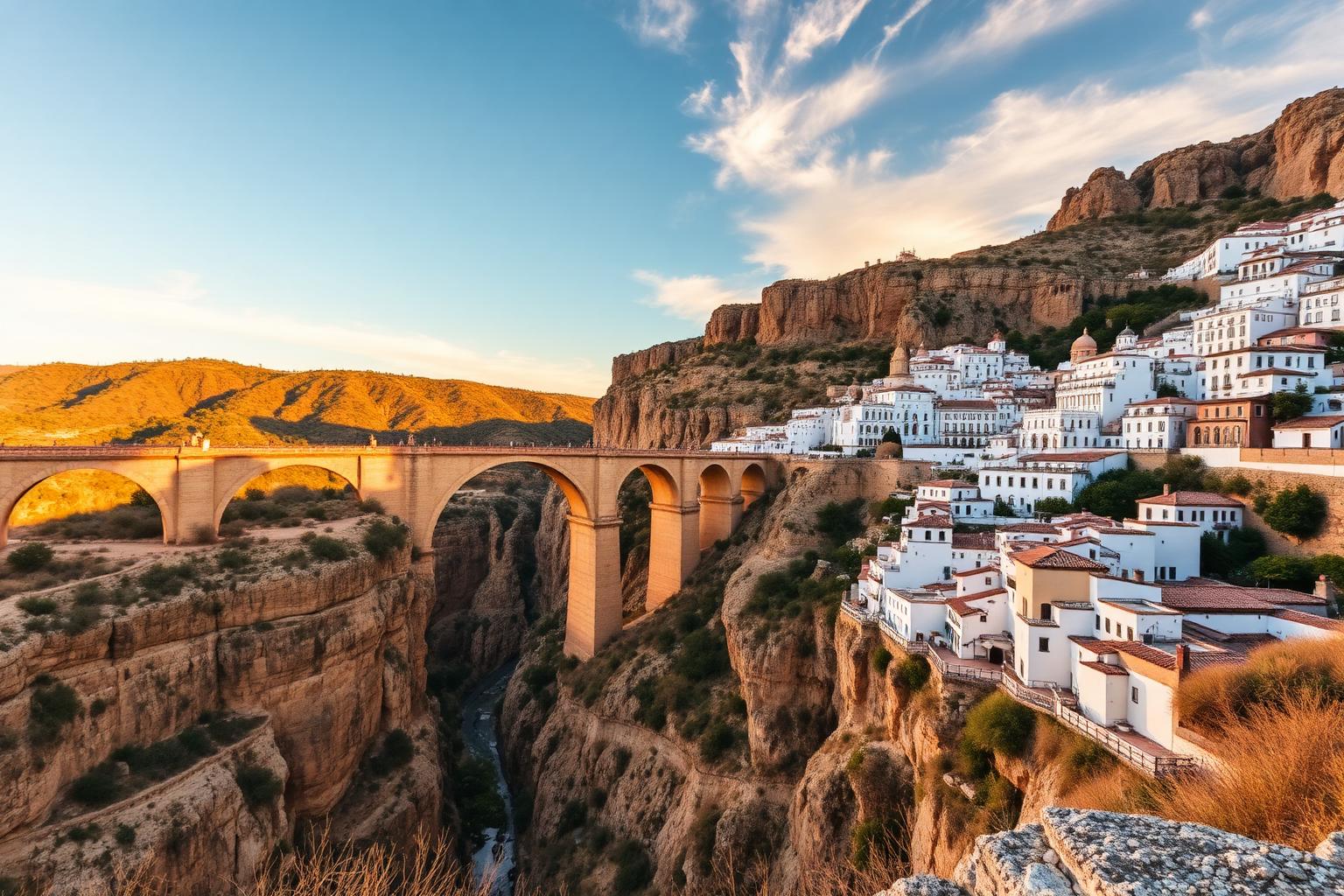
Spain
"White villages, tapas trails and coastlines that changed European art"
Spain at a glance
- Best time to go
- Spain is large and climatically varied, so May to June and September to October are usually the best all-round months: warm across most of the country without the peak summer heat of the south. Northern Spain (Basque Country, Galicia) stays milder and greener year-round, while the south (Andalusia) can be uncomfortably hot in July and August, often exceeding 40°C.
- How long to stay
- We'd suggest two weeks to combine two or three regions, for example Madrid and Andalusia, or Barcelona and the Basque Country, since Spain's regions differ enough that mixing them gives a much fuller picture than staying in one place.
- Who it's for
- Travellers who want cities, food, beaches and mountains all in one country, and who plan around the fact that the north and south run on quite different climates.
- Might not be for you if
- You expect one climate and one culture for the whole country. Spain's regions differ enough in food, language and character that treating it as one uniform trip undersells it.
Spain is a country of wildly different regions stitched loosely together — Basque pintxos and green hills in the north, Moorish palaces and pueblos blancos in the south, Catalan modernism in the east. Slow down and pick a region rather than sprinting through all of it.
Best Time to Visit
April to June and September to October
Apr – Jun
Warm south, wildflowers in Andalusia, ideal Camino de Santiago weather.
Sep – Oct
Grape harvest in Rioja, warm sea into October, comfortable everywhere.
Jul – Aug
Great for Basque country and Galicia; punishing in Madrid, Seville and Córdoba.
Dec – Feb
Ski season in the Pyrenees and Sierra Nevada, mild south, festive Christmas markets.
Getting Around
Spain has one of the world's best high-speed rail networks (AVE), plus cheap buses and easy inter-city flights.
🚄 AVE High-Speed Rail
Madrid–Barcelona in 2h30, Madrid–Seville in 2h30, Madrid–Málaga in 2h40. Book on Renfe, Iryo or Ouigo.
🚌 ALSA & FlixBus
Cheapest way between smaller towns and to villages the trains skip.
🚗 Rental Car
Essential for Andalusian pueblos blancos, the Basque coast, and rural Catalonia.
✈️ Domestic Flights
Vueling, Iberia and Ryanair cover Canary and Balearic islands from the mainland.
💡 Compare Renfe, Iryo and Ouigo — competition on the AVE routes now means Madrid–Barcelona from €10 if you book early.
Suggested Itineraries
Barcelona arrival
Settle in, evening on Passeig de Gràcia, first vermouth in El Born.
Gaudí day
Sagrada Família (pre-book), Park Güell, Casa Batlló.
AVE to Madrid
2h30 train, afternoon at the Prado, tapas in La Latina.
Toledo day trip
Half-hour AVE, cathedral and El Greco, back for late dinner.
AVE to Seville
Alcázar and Cathedral, evening flamenco in Triana.
Córdoba
45-min AVE to the Mezquita, patios, back to Seville for dinner.
Granada & Alhambra departure
Bus to Granada, Alhambra evening slot, fly out from Granada or Málaga.
🧭 Wandersparks rule: leave one thing undone on purpose. That's the little hook that pulls you back for round two.
Highlights
Must See
- Alhambra of Granada
- Ronda
- San Sebastián
- Camino de Santiago
Local Cuisine
Insider Tip
Spanish regions have distinct languages, cuisines and rhythms — treat them like separate countries.
Spain travel questions, answered
When is the best time to visit Spain?
May to June and September to October are generally the best all-round months, avoiding the most intense summer heat, particularly in the south. July and August are hot nationwide and especially punishing in Andalusia, where temperatures regularly exceed 40°C, while northern Spain, including the Basque Country and Galicia, stays milder year-round.
Should you visit northern or southern Spain?
It depends on your priorities and the season. The south (Andalusia) offers Moorish architecture, flamenco and intense heat in summer, best visited in spring or autumn. The north (Basque Country, Galicia, Asturias) is greener, cooler and known for its food scene, and works well even in summer when the south is too hot.
How do you get between Spain's major cities?
By high-speed AVE train, which connects cities like Madrid, Barcelona, Seville and Valencia quickly and comfortably, usually faster door-to-door than flying once airport time is factored in. Domestic flights and buses cover routes the train network doesn't reach as directly.
How many days do you need in Spain?
Two weeks lets you properly combine two or three regions without rushing. A shorter trip of a week works well if you focus on just one or two cities, such as Madrid and Barcelona, or Madrid and Seville.
Details last checked 23 September 2026.
More sparks for Spain
Stories, films and books to keep the daydreaming going.

AI-generated editorial illustration — Unofficial AI-generated editorial illustration inspired by the destination and atmosphere of the film or series. Not an official poster or promotional image.
Summer 1993
Discover the warm, golden landscapes of rural Catalonia through a child's eyes.

Homage to Catalonia
by George Orwell · Barcelona & Catalonia, Spain