
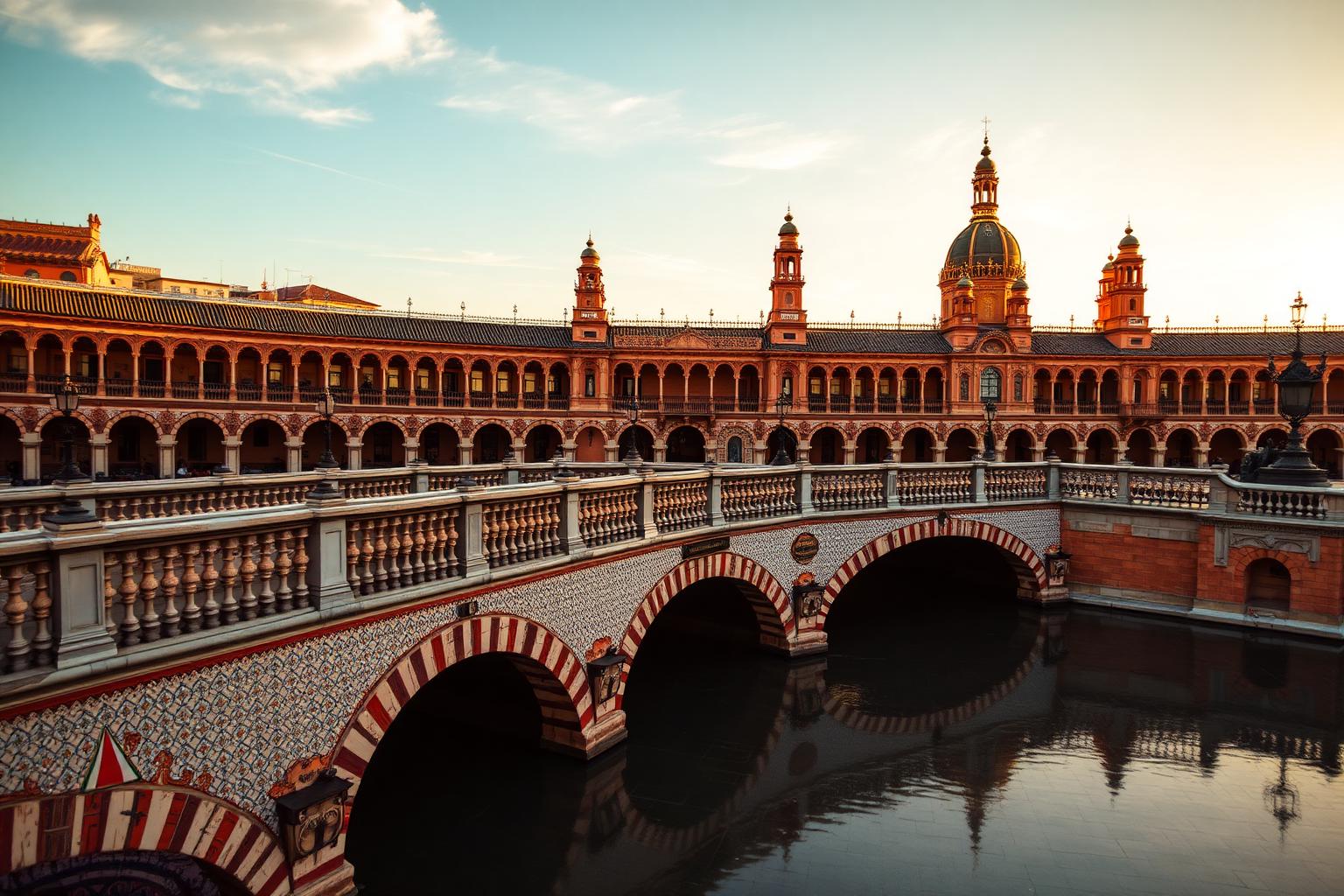
Seville, Spain
"Flamenco, tapas and Moorish palaces under the Andalusian sun"
Seville at a glance
- Best time to go
- February through early June and mid-September through November are the comfortable windows, with spring the clear favourite for orange blossom, mild days and Seville's two big festivals. Summer (June to August) is genuinely dangerous-hot, regularly hitting 40°C, and best avoided unless you're comfortable with extreme heat and can plan around it.
- How long to stay
- We'd suggest two to three days for the Alcazar, cathedral, Triana and a long, unhurried tapas crawl.
- Who it's for
- Architecture, flamenco and food lovers who want an intensely Andalusian city, ideally without the summer heat.
- Might not be for you if
- You're visiting in July or August. Afternoon highs regularly exceed 40°C, and not every hotel has reliable air conditioning, so check before booking if you're travelling then.
Seville is Andalusia at its most theatrical — orange blossom in the air, tiled patios, horse carriages by the cathedral, flamenco spilling out of Triana bars. The Real Alcázar and Plaza de España alone are worth the trip.
Best Time to Visit
March to May or October to November — summers hit 40°C+
Mar – May
Orange blossom in the air, Semana Santa processions (Easter), Feria de Abril fair.
Oct – Nov
Warm days, cool nights, tapas terraces still open, fewer crowds.
Dec – Feb
Mild winter (15–18°C), ideal for sightseeing without the heat.
Jun – Sep
40°C+ common — locals siesta and life shifts to late night. Only for the heat-tolerant.
Getting Around
Seville's historic centre is walkable and mostly pedestrianised — one tram line and a small metro handle the rest.
🚋 Tram (MetroCentro)
Single line linking Plaza Nueva, Cathedral and San Bernardo — handy for tired feet in the centre.
🚇 Metro
One line (Line 1) connecting the outskirts to the centre — useful from suburban hotels.
🚌 TUSSAM Buses
Comprehensive city network; airport bus EA runs every 20–30 min to the centre.
🚲 Sevici Bikes
260+ docking stations and flat terrain make Seville one of Europe's best cycling cities.
🚶 Walking
Santa Cruz, Triana and the Cathedral quarter are made for wandering on foot.
💡 Buy a rechargeable Tarjeta Multiviaje for TUSSAM buses and the tram — halves the price of single tickets.
Suggested Itineraries
Arrival & Santa Cruz
Settle in, evening wander through the Jewish quarter, first pescaíto frito dinner.
Alcázar & Cathedral
Alcázar early, Cathedral and Giralda, tapas lunch, sunset at Metropol.
Plaza de España & Museo
María Luisa Park, Plaza de España, Museum of Fine Arts, evening in Alameda de Hércules.
Triana
Ceramics workshops, Mercado de Triana lunch, Castillo de San Jorge (Inquisition museum), flamenco at Casa Anselma.
Córdoba day trip
45-min AVE to Córdoba — Mezquita, Jewish quarter, patios if May, back for dinner.
Cádiz or Ronda day trip
Choose: seaside Cádiz for oysters and beach, or mountain Ronda for the gorge bridge.
Slow morning & departure
Churros at El Comercio, last-minute shopping on Calle Sierpes, transfer to SVQ.
🌙 Pace yourself, spark-chaser. A trip you actually remember beats a checklist you barely survived.
Highlights
Must See
- Real Alcázar
- Cathedral & Giralda
- Plaza de España
- Metropol Parasol
Local Cuisine
Insider Tip
Book the Alcázar online in advance — walk-up queues can eat half your morning.
Seville travel questions, answered
When is the best time to visit Seville?
February through early June is the prime window, and it's when Seville's two signature events, Semana Santa (Holy Week, usually March or April) and the Feria de Abril about two weeks later, take over the city. Mid-September through November is a strong secondary option with pleasant temperatures and far fewer visitors. Summer, June through August, is best avoided unless you're prepared for extreme heat.
Should you visit during Semana Santa or Feria de Abril?
Only if you book accommodation months ahead, since the city fills to capacity for both events and hotel prices rise sharply. Semana Santa's processions and Feria's week-long fairground celebration are genuinely spectacular and worth experiencing, but they're not a spontaneous add-on to a trip; plan around them deliberately.
How hot does Seville get in summer?
Very hot. Afternoon highs regularly reach and exceed 40°C in July and August, and the heat is intense enough that sightseeing plans need to shift to mornings and evenings, with the hottest hours spent indoors. If you're travelling then, book accommodation with reliable air conditioning and a pool or plunge pool if possible.
How many days do you need in Seville?
Two to three days covers the Alcazar, cathedral and Giralda tower, the Santa Cruz quarter, and Triana across the river, with plenty of time for long lunches and evening tapas in between.
Details last checked 23 September 2026.