
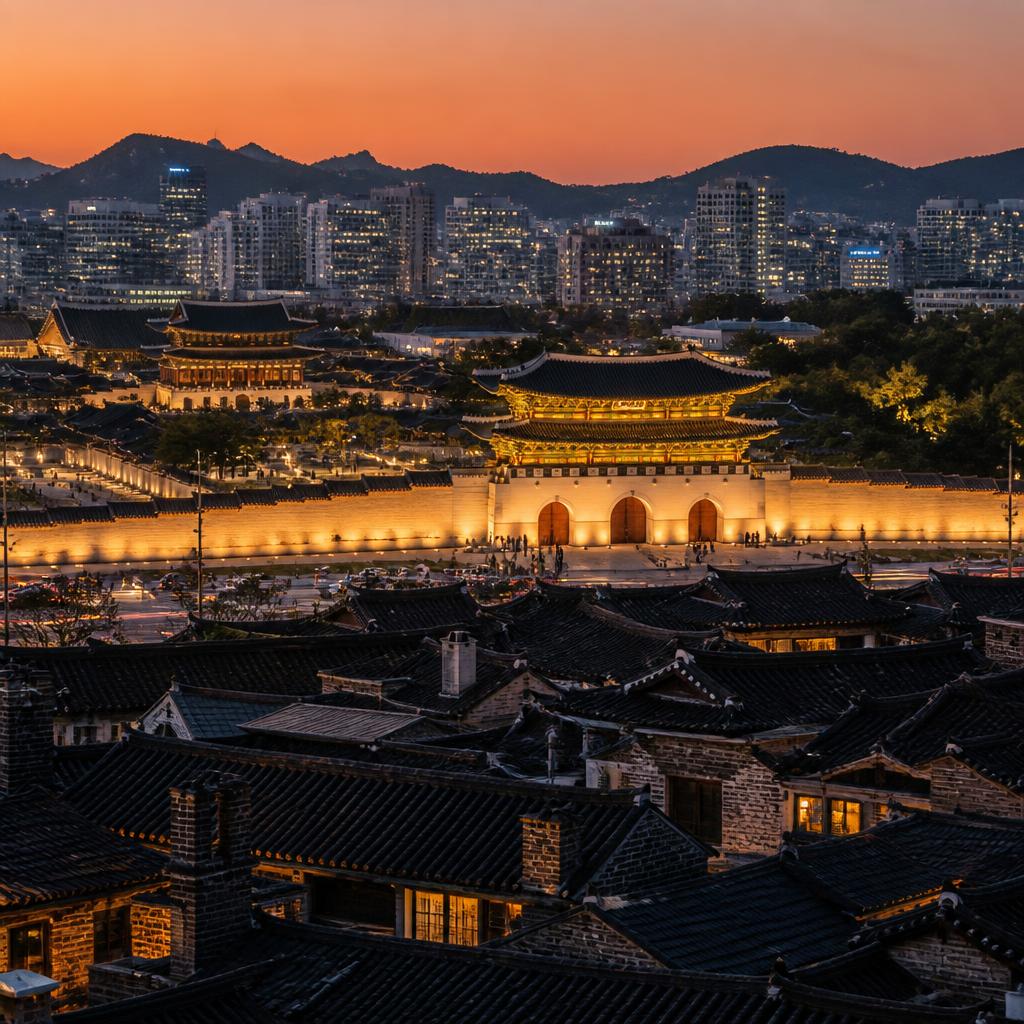
Seoul, South Korea
"K-pop energy meets 600-year-old palaces"
Seoul at a glance
- Best time to go
- Late April through mid-June and September through late October are usually the best windows: comfortable temperatures and (outside cherry blossom week) manageable crowds. Cherry blossom season typically peaks in early to mid-April and is Seoul's single busiest period, so book well ahead if that's your priority. Mid-July through August is hot, humid and the peak of the monsoon.
- How long to stay
- We'd suggest four to five days to cover the palaces, markets and a few neighbourhoods without rushing.
- Who it's for
- First-time visitors chasing palaces, street food and K-culture, and repeat visitors chasing specific neighbourhoods or day trips.
- Might not be for you if
- You're visiting during cherry blossom week without having booked well ahead. Accommodation and popular viewing spots fill up fast during that narrow window.
Seoul is where hyper-modern meets deeply traditional — palaces and hanok villages sit next to neon-lit street food alleys and 24-hour cafés. World-class transit, safe at 3am, and food ranging from $2 tteokbokki to Michelin-star Korean BBQ.
Best Time to Visit
April to May (spring blossoms) or September to November (autumn)
April to May (spring blossoms) or September to November (autumn)
The recommended period for the most pleasant weather and best overall experience.
Shoulder Season
Fewer crowds and better prices, with generally acceptable weather conditions.
Off-Peak
Lowest prices and emptiest attractions, though weather may be less predictable.
Getting Around
Seoul's subway is arguably the best in the world — clean, cheap, punctual, and blanketing every neighbourhood.
🚇 Seoul Metro
23 lines with English signage, free Wi-Fi, and heated seats in winter. Runs 5:30am–midnight.
🚌 City Bus
Colour-coded buses (blue trunk, green feeder, red express, yellow circular) reach where the metro doesn't.
🚆 AREX Airport Line
Express from Incheon Airport to Seoul Station in 43 minutes; all-stop trains are cheaper.
🚕 Taxi & Kakao T
Plentiful and affordable. Use the Kakao T app for English booking and card payment.
💡 Buy a T-money card at any convenience store — works on subway, buses, taxis, and even vending machines nationwide.
Suggested Itineraries
Arrival
Myeongdong stroll, first Korean BBQ.
Palaces & Bukchon
Gyeongbokgung, Bukchon, Insadong.
DMZ
Half-day guided tour.
Hongdae & Yeonnam
Youth districts, indie cafés, nightlife.
Suwon Fortress
UNESCO Hwaseong fortress day trip.
N Seoul Tower & Ihwa Mural
Cable car, murals, Namsan walk.
Departure
Traditional breakfast, transfer to Incheon.
🗺️ Overwhelmed? Pick your three most-wants and let the rest be delightful maybes. Sparks over stress, always.
Highlights
Must See
- Gyeongbokgung Palace
- Bukchon Hanok Village
- N Seoul Tower
- Gwangjang Market
Local Cuisine
Insider Tip
Get a T-money card at any convenience store — it works on the subway, buses, and even taxis.
Seoul travel questions, answered
When is the best time to visit Seoul?
Late April to mid-June and September to late October are generally the most comfortable, with mild temperatures and (outside the cherry blossom peak) thinner crowds than you'd expect. Cherry blossom season, typically peaking in early to mid-April, is stunning but also Seoul's busiest and most expensive stretch. Mid-July through August is hot, humid and the wettest part of the year.
Do you need a visa or K-ETA for South Korea?
It depends on your passport. Many nationalities are currently exempt from South Korea's K-ETA (Korea Electronic Travel Authorization) requirement under a temporary waiver that has been extended more than once, while others must apply in advance through the official K-ETA portal. Because this exemption has a habit of being extended right before it expires, check the official portal for your passport's current status rather than assuming last year's rule still applies.
How many days do you need in Seoul?
Four to five days covers the main palaces (Gyeongbokgung, Changdeokgung), markets like Gwangjang, and a few neighbourhoods such as Hongdae or Bukchon at a relaxed pace. Add a day for a side trip, such as the DMZ or Nami Island.
How do you get around Seoul?
A T-money card, a rechargeable transit card sold at convenience stores and subway stations, covers the subway, buses and even some taxis, and is the easiest way to get around without buying individual tickets each time. Seoul's subway system is extensive, clean and has English signage throughout.
Details last checked 23 September 2026.
More sparks for Seoul
Stories, films and books to keep the daydreaming going.

AI-generated editorial illustration — Unofficial AI-generated editorial illustration inspired by the destination and atmosphere of the film or series. Not an official poster or promotional image.
Past Lives
Two childhood friends, two cities and twenty-four years of what-if.