
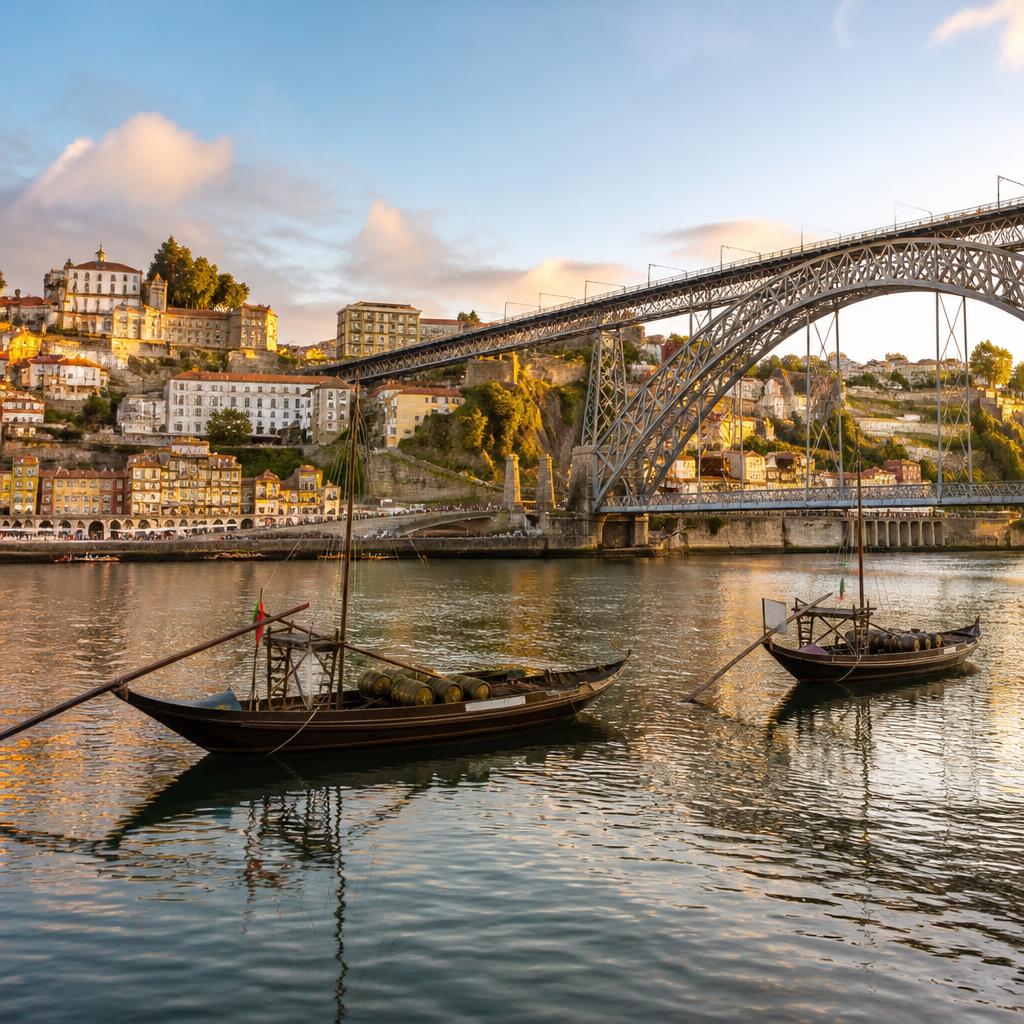
Porto, Portugal
"Granite, port wine and a river that does all the showing off"
Porto at a glance
- Best time to go
- May to June and September to October are usually the sweet spot: warm, but fewer crowds than July and August. If you'd like to see the city at its loudest, Sao Joao (the night of 23 into 24 June) is Porto's big street party, and it's also the hardest time to find a bed, so book well ahead.
- How long to stay
- We'd suggest two to three days for the city itself, and a fourth if you'd like a day in the Douro Valley.
- Who it's for
- Walkers who don't mind hills, and anyone who enjoys a city built around a river, tiled facades and long lunches.
- Might not be for you if
- Steep, cobbled streets are a problem for you or your luggage. Porto is best on comfortable shoes and less ideal if step-free access is a priority.
Porto is Lisbon's moodier, more affordable sibling: azulejo-tiled facades stacked above the Douro, port lodges across the water in Gaia, and a food scene built on francesinha, tinned fish and wine that costs less than coffee elsewhere. Small enough to walk in a weekend, layered enough to keep you a week.
Best Time to Visit
May to June and September to October — warm, dry and far less crowded than August
Dec – Feb
Cool, rainy and cheap. Port lodges and tiled churches are indoor-friendly.
Mar – May
Blossom, long light and terrace weather without the queues.
Jun – Aug
Warmest and busiest, with São João street parties on 23 June.
Sep – Nov
Douro grape harvest, warm river light, best value of the year.
Getting Around
Compact, walkable and steep. The metro covers the airport run, everything else is legs and the occasional tram.
🚇 Metro
Line E connects the airport to the centre in about 30 minutes for a couple of euros.
🚶 Walking
The historic core is small — expect hills, cobbles and stairs, so bring real shoes.
🚋 Historic Trams
Line 1 along the river to Foz is slow, rattly and worth it.
🚆 Regional Trains
The Douro line to Pinhão is one of Europe's prettiest rail rides.
💡 Buy an Andante card and top it up — single paper tickets add up fast.
Suggested Itineraries
Arrive Porto
Settle in, evening stroll along the Ribeira.
Old Town
Cathedral, São Bento, Clérigos and a francesinha you'll need a nap after.
Port Lodges
Gaia cellars, cable car, rooftop sunset over the river.
Douro Valley
Train to Pinhão, terraced vineyards, boat on the river.
Coast Day
Foz do Douro promenade, Matosinhos seafood, surf watching.
Art & Markets
Serralves gardens, Bolhão market, tinned fish shopping.
Departure
Pastel de nata and the metro to the airport.
🗺️ Overwhelmed? Pick your three most-wants and let the rest be delightful maybes. Sparks over stress, always.
Highlights
Must See
- Dom Luís I Bridge
- São Bento station tiles
- Clérigos Tower
- Foz do Douro sunset
Local Cuisine
Insider Tip
Cross the upper deck of the Dom Luís I bridge on foot at sunset — the best view in the city costs nothing.
Porto travel questions, answered
When is the best time to visit Porto?
May to June and September to October are usually the best balance of mild weather, fewer crowds and fairer prices. July and August tend to be the hottest and busiest. Winter is quieter and wetter. For Sao Joao on 23 to 24 June, we'd suggest booking accommodation several months ahead.
How many days do you need in Porto?
Two to three days is usually enough for the main sights, the riverfront and a couple of long meals. A fourth day gives you room for a Douro Valley day trip.
How do you get from Porto airport to the city centre?
The metro (Line E, the violet line) is usually the easiest option and takes roughly 25 to 30 minutes to the centre. The airport sits in a higher fare zone than the central zones, so make sure you buy the correct zone ticket rather than a cheaper central-zone one, which can result in a fine.
Can you do the Douro Valley as a day trip by train?
Yes. Trains on the Douro line run from Porto Sao Bento, reaching Regua in under two hours and Pinhao in a little over two hours, one way. Trains aren't very frequent, so check the return timetable before you get off, and some travellers prefer finishing the day in Regua, since return trains from there can be more frequent than from Pinhao.
Details last checked 23 September 2026.