
Nepal
"Trek to the roof of the world in the Himalayas"
Nepal at a glance
- Best time to go
- Autumn (roughly late September to November) is widely considered the best trekking season, with clear skies and stable weather, and it's also the busiest. Spring (March to May) is the next best, with milder temperatures and blooming rhododendrons, though afternoon haze can reduce visibility. Winter (December to February) is much colder at altitude but has quiet trails, and the monsoon (June to September) brings mud, leeches and limited mountain visibility, making it a poor time for high-altitude trekking.
- How long to stay
- We'd suggest twelve to sixteen days for a classic trek such as Everest Base Camp or the Annapurna Circuit, including a couple of buffer days for acclimatisation and possible weather delays.
- Who it's for
- Trekkers, mountain lovers and culturally curious travellers who don't mind planning around altitude and, since 2023, a mandatory local guide for most routes.
- Might not be for you if
- You're hoping to trek independently without a guide, since most major routes now require one. Nepal's mountain regions occasionally see flooding, landslides or earthquakes that can affect specific valleys and access roads, so it's worth checking current conditions for your exact route shortly before you go, whichever region you're headed to.
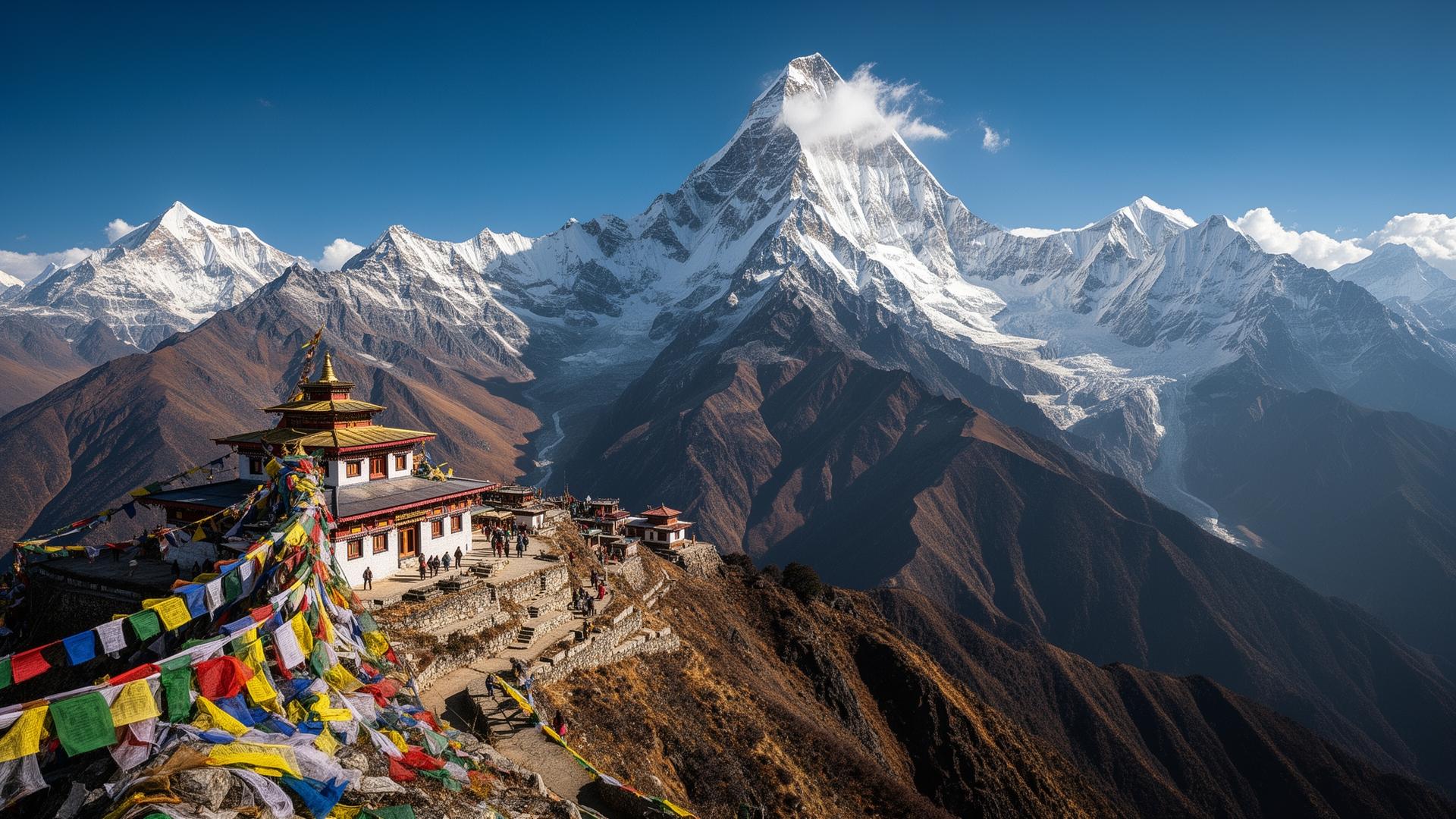
Nepal is the ultimate destination for mountain lovers and spiritual seekers. Home to eight of the world's fourteen highest peaks, including Everest, Nepal offers world-class trekking along with rich Buddhist and Hindu heritage.
Best Time to Visit
October to December or March to May
Oct – Nov (Autumn)
The best time. Clear skies, stunning mountain views, comfortable temperatures, and festival season (Dashain, Tihar).
Mar – May (Spring)
Rhododendrons in bloom, warming weather, and clear skies. Second-best trekking season.
Jun – Sep (Monsoon)
Heavy rains, leeches on trails, but lush landscapes. Upper Mustang and Dolpo are rain-shadow alternatives.
Dec – Feb (Winter)
Cold at altitude, some passes closed, but low-altitude treks and Kathmandu Valley are pleasant.
Getting Around
Nepal's terrain makes transport challenging but adventurous. Domestic flights save days of driving.
✈️ Domestic Flights
Buddha Air and Yeti Airlines connect Kathmandu to Pokhara, Lukla, and other trailheads.
🚌 Tourist Buses
Comfortable buses between Kathmandu, Pokhara, and Chitwan. Book through your hotel.
🚕 Local Taxis
Negotiate fares before getting in. Use the Pathao app for metered rides in Kathmandu.
🚶 Trekking
Walking is the main transport in the mountains. Porters and guides are affordable and recommended.
💡 Book domestic flights early and keep flexible backup plans — weather cancellations are common in mountain airports.
Suggested Itineraries
Kathmandu Arrival
Settle in, evening walk in Thamel.
Kathmandu Valley
Boudhanath, Pashupatinath, Swayambhunath.
Fly to Pokhara
Short flight, Phewa Lake boat, sunset at World Peace Pagoda.
Sarangkot & Poon Hill Base
Sarangkot sunrise, drive to Nayapul, trek to Ulleri.
Ghorepani & Poon Hill
Trek to Ghorepani, early rise for Poon Hill (3,210m) sunrise over the Annapurnas.
Trek out to Pokhara
Descend via Tikhedhunga, drive back to Pokhara, lakeside dinner.
Return & Departure
Fly back to Kathmandu, final temple visits, departure.
✨ Feeling dizzy already? Breathe. This is a menu, not a to-do list — skip a stop, nap by a fountain, leave a couple of sparks for next time.
Highlights
Must See
- Everest Base Camp
- Annapurna Circuit
- Kathmandu Valley
- Lumbini
Local Cuisine
Insider Tip
Acclimatize properly when trekking at altitude - mountain sickness can affect anyone.
Nepal travel questions, answered
Is it safe to trek in Nepal?
Generally yes, and millions of trekkers visit without incident. Nepal's mountain terrain means that flooding, landslides and occasional earthquakes can temporarily affect specific valleys and access roads, usually without touching the country's other regions. Rather than assuming the whole country is affected by news of a problem in one area, check the US or UK government pages, which give area-specific detail, close to your travel date.
Do you need a guide to trek in Nepal?
Since a rule change in March 2023, yes, for most major routes. A licensed guide is now required in all conservation areas and national parks, including the Everest and Annapurna regions, and Nepal's restricted areas (Upper Mustang, Manaslu, Upper Dolpo and Kanchenjunga) require a licensed guide plus a minimum of two trekkers. If you're booking an organised trek, your agency handles this; independent trekkers need to arrange a licensed guide before setting out.
What permits do you need to trek in Nepal?
Every trek needs a TIMS (Trekkers' Information Management System) card plus the relevant area permit, such as the Annapurna Conservation Area Permit or the Sagarmatha National Park permit for Everest Base Camp, with an additional local municipality fee in the Everest region. A trekking agency in Kathmandu or Pokhara can usually arrange all of this at once.
How many days do you need for the classic Nepal treks?
Everest Base Camp typically takes twelve to sixteen days including acclimatisation days, and the Annapurna Circuit or Annapurna Base Camp trek generally takes seven to twelve days depending on the exact route. Building in one or two spare days for altitude adjustment or weather delays is commonly recommended rather than cutting it close.
Details last checked 22 September 2026.
More sparks for Nepal
Stories, films and books to keep the daydreaming going.

The Snow Leopard
by Peter Matthiessen · Nepal & Tibet