
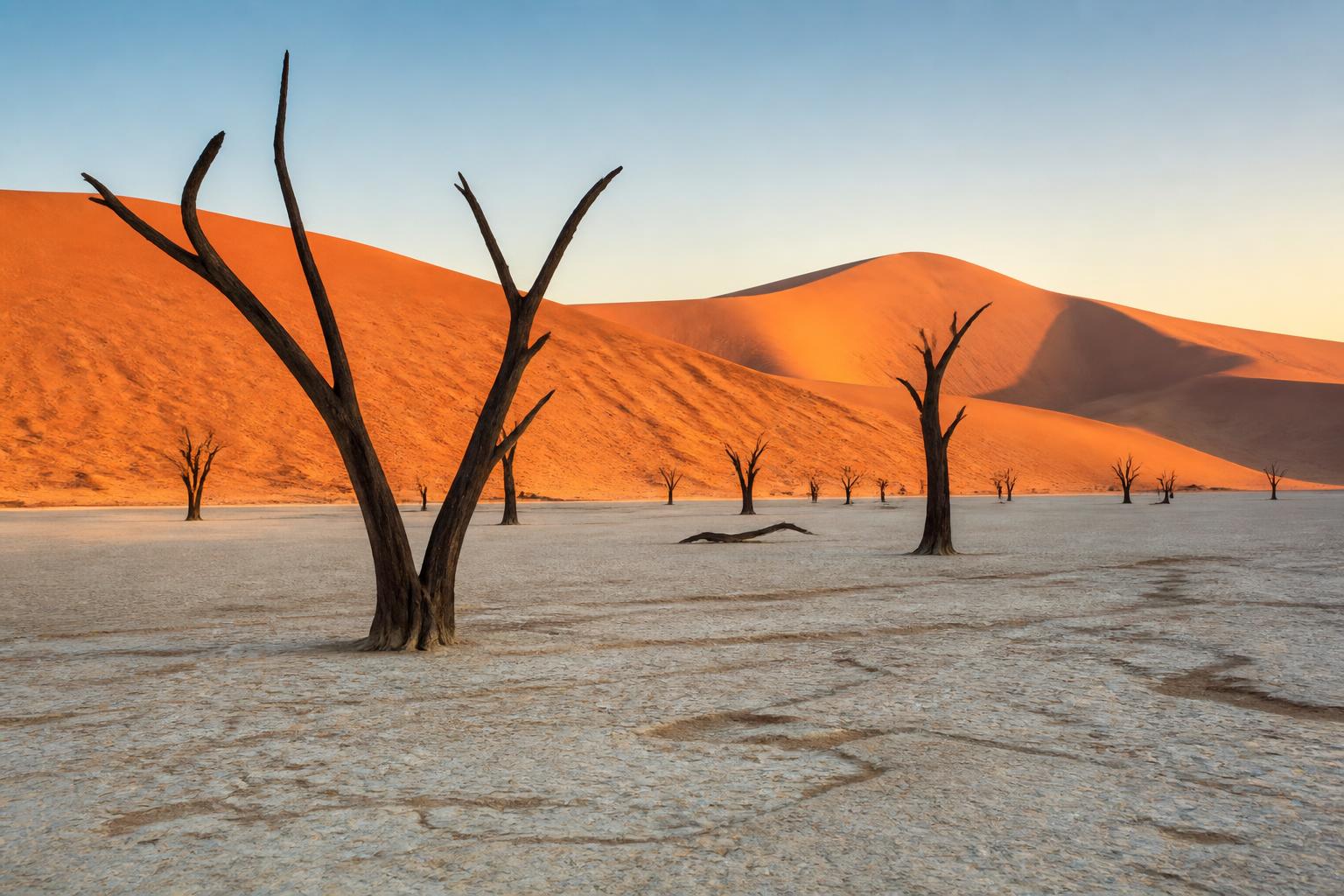
Namibia
"The world's oldest desert, empty and unreal"
Namibia at a glance
- Best time to go
- Roughly May to October is the dry season and the best for wildlife viewing, since animals concentrate around waterholes, particularly at Etosha National Park, and the weather is cool and clear. July to September is peak season for game viewing. The wetter, greener season (November to April) has lower prices and dramatic thunderstorms, along with good birdwatching and newborn wildlife, though some roads can be harder going.
- How long to stay
- We'd suggest ten to fourteen days to combine Etosha, the Namib Desert (Sossusvlei) and the coast, since Namibia's distances are large and self-driving between highlights takes real time.
- Who it's for
- Self-drive adventurers and wildlife photographers who want big, empty landscapes and don't mind long distances between stops.
- Might not be for you if
- You want a short trip covering the whole country, or you're not comfortable with long, sometimes unpaved, self-drive routes between major sights.
Namibia is emptiness on a spiritual level — the red dunes of Sossusvlei, the shipwrecked Skeleton Coast, Etosha's salt pan full of wildlife, and star skies so dark they don't feel real. It's one of the safest and easiest African countries for a self-drive road trip.
Best Time to Visit
May to October (dry season)
May to October (dry season)
The recommended period for the most pleasant weather and best overall experience.
Shoulder Season
Fewer crowds and better prices, with generally acceptable weather conditions.
Off-Peak
Lowest prices and emptiest attractions, though weather may be less predictable.
Getting Around
Namibia's vast desert distances demand a 4x4 — this is one of the world's great self-drive road trips.
🚙 4x4 with Rooftop Tent
The classic Namibia setup — camp under the Milky Way at Sesriem, Etosha, and Spitzkoppe.
✈️ Charter Flights
Scenic flights over Sossusvlei and Skeleton Coast — a jaw-dropping alternative to long drives.
🚗 Rental Car (2WD)
Fine for the main tar roads (Windhoek–Swakopmund) but limiting for gravel and dunes.
🚐 Guided Overland Tour
Small-group trucks handle logistics and camping if you'd rather not self-drive.
💡 Carry two spare tyres, extra fuel, and plenty of water — distances between fuel stations can exceed 300km.
Suggested Itineraries
Windhoek to Sesriem
Pick up 4x4, drive south.
Sossusvlei
Sunrise at Dune 45 and Deadvlei.
Drive to Swakopmund
Coastal town, seafood dinner.
Swakopmund Activities
Sandboarding, quad, or scenic flight over Skeleton Coast.
Drive to Damaraland
Twyfelfontein rock engravings.
Etosha South
Enter Etosha, waterhole game drive.
Return to Windhoek
Long drive back for departure.
🌱 Psst — you don't have to do it all. The best souvenirs are slow mornings and one unplanned detour you'll still be talking about years later.
Highlights
Must See
- Sossusvlei & Deadvlei
- Etosha National Park
- Swakopmund
- Fish River Canyon
Local Cuisine
Insider Tip
Rent a 4x4 with a rooftop tent — the country is built for self-driving and campsites are excellent.
Namibia travel questions, answered
When is the best time to visit Namibia?
Roughly May to October is the dry season and the best time for wildlife viewing, with animals gathering at waterholes and clearer, cooler weather. July to September is peak season. The wetter season, roughly November to April, transforms the landscape with dramatic storms, lush scenery and newborn wildlife, along with lower prices and fewer visitors, though some roads become harder to drive.
How many days do you need in Namibia?
We'd suggest ten to fourteen days to properly combine Etosha National Park, the Namib Desert around Sossusvlei, and some coastal time, for example around Swakopmund. Namibia is vast and sparsely populated, so distances between highlights take real time to drive.
Do you need a 4x4 to self-drive in Namibia?
For some routes, yes. Many of Namibia's main roads are well-maintained gravel, manageable in a standard 2WD with care, but certain areas, especially deep in the desert or after rain, are better suited to a 4x4. Check current road conditions for your specific route, and always carry extra water and fuel on long, remote stretches.
When can you see Etosha's wildlife at its best?
The dry season, roughly May to October and especially July to September, is when animals concentrate most predictably around the park's waterholes, since natural water sources elsewhere have dried up, making sightings easier.
Details last checked 22 September 2026.