
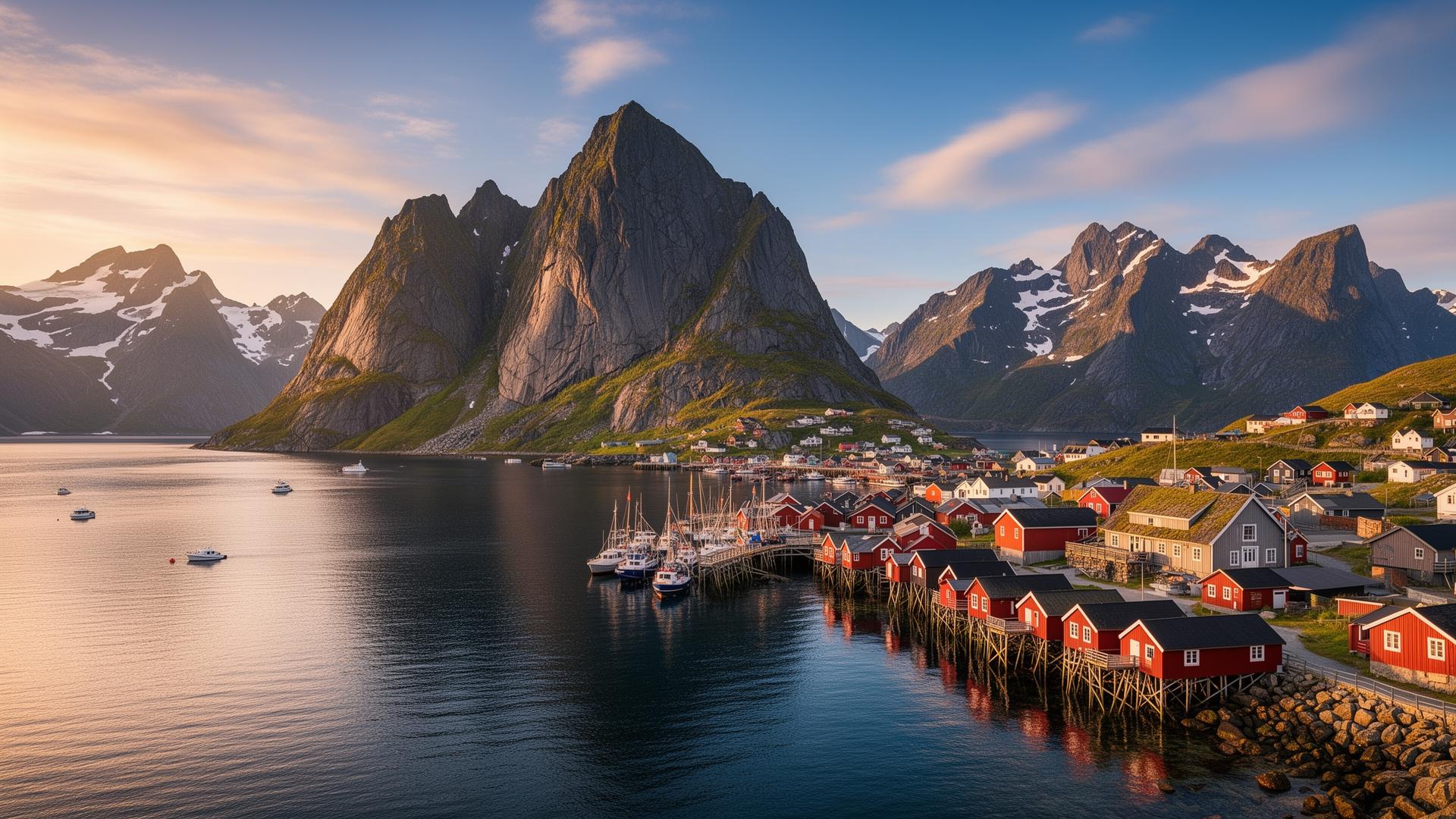
Lofoten Islands, Norway
"Fish under the midnight sun in Arctic paradise"
Lofoten Islands at a glance
- Best time to go
- Late June to mid-August gives the midnight sun and the mildest weather, and it's also the busiest and priciest stretch. September and October are increasingly popular for a quieter visit with a real chance of the northern lights. Winter (roughly November to March) is dramatic and atmospheric, with the aurora often visible on clear nights, but daylight is very short and many businesses reduce their hours.
- How long to stay
- We'd suggest five to seven days to explore a handful of fishing villages and do some hiking without rushing the narrow, scenic E10 road, which takes longer to drive than the distances suggest.
- Who it's for
- Landscape photographers, hikers and northern-lights chasers who don't mind changeable Arctic weather.
- Might not be for you if
- You want guaranteed clear skies for photos or aurora viewing. Weather here changes quickly and can disrupt both.
The Lofoten Islands are an Arctic archipelago of dramatic peaks, sheltered bays, and traditional fishing villages. With excellent hiking, Northern Lights viewing, and the famous stockfish tradition, Lofoten offers Norway's most photogenic landscapes.
Best Time to Visit
June to August for midnight sun; September to March for Northern Lights
June to August for midnight sun; September to March for Northern Lights
The recommended period for the most pleasant weather and best overall experience.
Shoulder Season
Fewer crowds and better prices, with generally acceptable weather conditions.
Off-Peak
Lowest prices and emptiest attractions, though weather may be less predictable.
Getting Around
The E10 highway strings the Lofoten islands together — a rental car is by far the most rewarding way to explore.
🚗 Rental Car
Pick up in Bodø or fly into Leknes/Svolvær. Essential for reaching remote beaches and trailheads.
⛴️ Hurtigruten & Ferries
Coastal ferry from Bodø to Moskenes is a spectacular 3.5-hour crossing.
🚌 Nordland Bus
Bus 18-741 runs the length of the archipelago — infrequent but scenic.
🚲 Bicycle
Long summer daylight and flat coastal roads make cycling between fishing villages magical.
💡 Book campervans months ahead for summer — accommodation is limited and prices spike in July.
Suggested Itineraries
Arrival Bodø
Ferry to Moskenes.
Reine & Hamnøy
Iconic red rorbuer.
Reinebringen
Sunrise hike.
Kvalvika & Ryten
Beach and viewpoint.
Nusfjord & Henningsvær
Fishing villages.
Svolvær & Trollfjord
Sea eagle cruise.
Depart
Fly out from Leknes or Svolvær.
🗺️ Overwhelmed? Pick your three most-wants and let the rest be delightful maybes. Sparks over stress, always.
Highlights
Must See
- Reine
- Kvalvika Beach
- Reinebringen hike
- Henningsvær
Local Cuisine
Insider Tip
Stay in a traditional rorbu (fisherman's cabin) for an authentic Lofoten experience.
Lofoten Islands travel questions, answered
When is the best time to visit the Lofoten Islands?
Late June to mid-August is peak season, with the midnight sun, the mildest temperatures and all trails and tours running, but also the most crowded and expensive. September and October are a quieter alternative with cooler weather and a good chance of early northern lights. Winter offers snowy scenery and strong aurora chances on clear nights, but daylight is very limited and some tourist infrastructure scales back.
When can you see the midnight sun in Lofoten?
Roughly late May through mid-July, depending on the exact location, the sun doesn't set below the horizon at all. Outside that narrow window, late spring and summer still offer very long daylight hours even if the sun technically dips below the horizon briefly.
When is the best time for northern lights in Lofoten?
Roughly September through March, when the nights are dark enough, with September, October, February and March often preferred over the darkest midwinter months for a slightly better combination of clear skies and tolerable cold. Clear, moonless nights away from village lights give the best chance.
Do you need a car in the Lofoten Islands?
Most visitors rent one, since the archipelago's villages, beaches and trailheads are spread along the E10 and connecting roads with limited public transport. The E10 is scenic but narrow and can be slow, especially in peak summer traffic, so budget more driving time than the map distances suggest.
Details last checked 22 September 2026.