
Kyrgyzstan
"Nomad culture, alpine lakes and horse treks through the Tian Shan"
Kyrgyzstan at a glance
- Best time to go
- Roughly June to September is the main season, when high mountain passes and trekking routes are clear and yurt camps at places like Song-Kul are open. May and October are quieter shoulder months, good for Bishkek and Osh, but higher routes can still hold snow. Winter largely closes the mountains to casual visitors, though it suits skiing at a handful of resorts.
- How long to stay
- We'd suggest ten days to combine Bishkek, a trek or horseback trip, and one of the alpine lakes (Issyk-Kul or Song-Kul), since travel between regions on unpaved mountain roads takes longer than distances suggest.
- Who it's for
- Trekkers, horseback riders and travellers who want dramatic, little-visited mountain scenery without a long queue of other tourists.
- Might not be for you if
- You're planning to rent a standard car for remote routes. Roads to places like Song-Kul and Tash Rabat need a 4x4, and border zones require a separate permit.
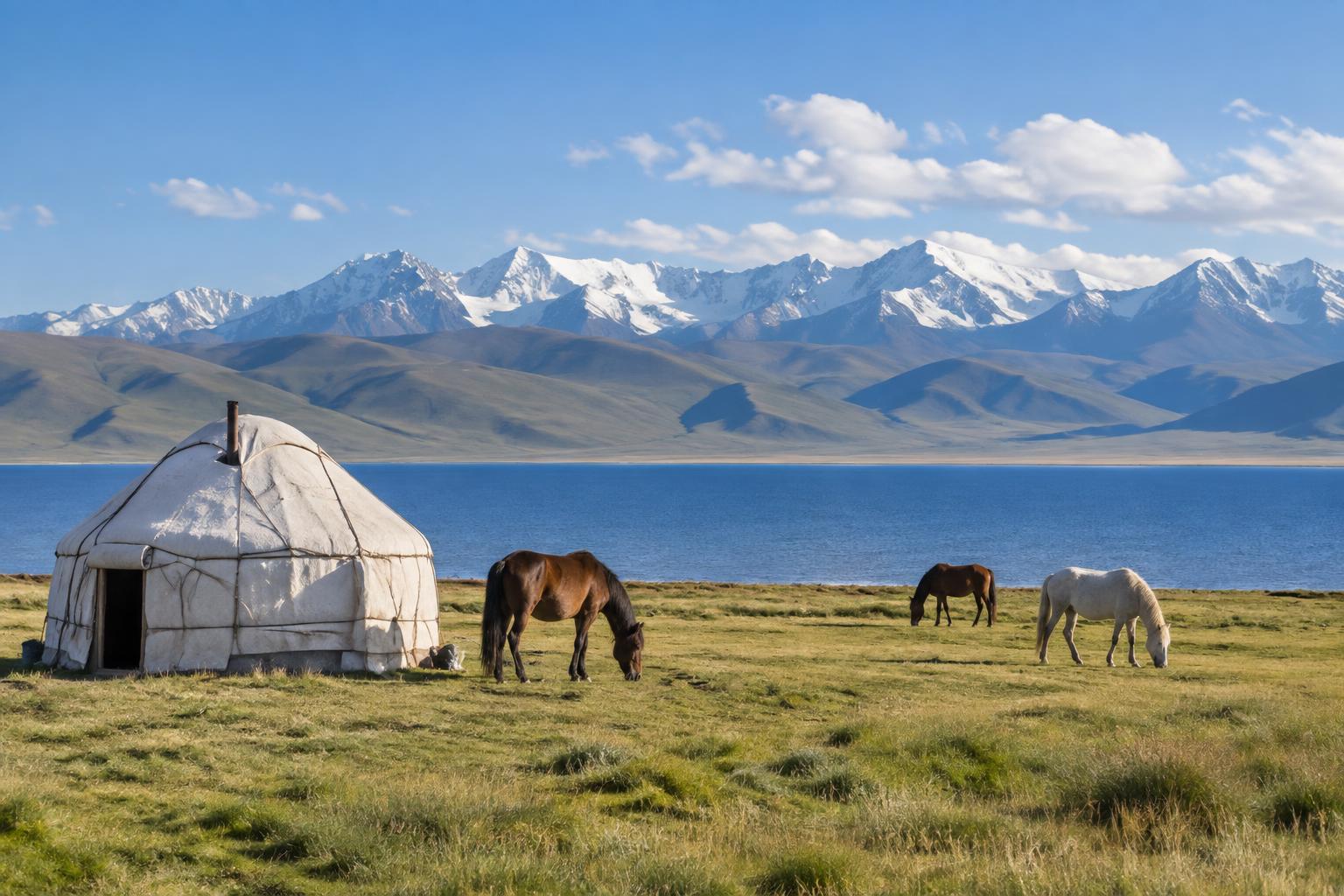
Kyrgyzstan is Central Asia at its most raw and welcoming — 90% mountains, dotted with yurt camps, glacial lakes and eagle hunters. Song-Kul and Issyk-Kul are otherworldly, visa-free for most, and homestays make it one of the cheapest adventure destinations in Asia.
Best Time to Visit
June to September — mountain passes are snowed in the rest of the year
Jun – Sep
Mountain passes open, yurt camps operational at Song-Kul and Tash Rabat, wildflowers and horse trekking peak.
Jul – Aug
Warmest — perfect for Ala-Kul trek and Issyk-Kul beach days. Nomad Games years fall here.
May & Oct
Lower valleys accessible, colours dramatic, but high passes still snowed in.
Nov – Apr
Ski touring around Karakol and Jyrgalan; most yurt camps and treks closed.
Getting Around
Kyrgyzstan runs on shared marshrutka minivans, hired drivers and horses — trains barely exist, and self-drive is only for the confident.
🚐 Marshrutka (Shared Minivans)
Cheap, frequent minivans between Bishkek, Karakol, Osh and every mountain town. Leave when full.
🚕 Shared Taxis
Faster and slightly pricier than marshrutkas on long routes like Bishkek–Osh.
🐎 Horse
The traditional way to reach Song-Kul, Ala-Kul and remote jailoos (summer pastures). Arranged via CBT offices.
🚗 4×4 with Driver
Essential for high mountain passes like Kazarman or Kel-Suu — book through local guesthouses.
🚌 Bishkek City Buses & Trolleybuses
Cheap and simple in the capital; pay in cash to the driver.
💡 Use the CBT (Community-Based Tourism) network — every town has an office arranging homestays, horses and drivers at fixed fair prices.
Suggested Itineraries
Bishkek arrival
Settle in, walk Ala-Too Square, dinner at Frunze or Supara ethnocomplex.
Ala-Archa National Park
Half-day hike in the glacier valley, back for Osh Bazaar afternoon.
Drive to Song-Kul via Kyzart pass
Long scenic drive with 4×4 or shared taxi, arrive at 3,016m alpine lake, sleep in a yurt camp.
Song-Kul
Horse ride around the lake, herders' families, sunset over the water.
Song-Kul → Kochkor → Karakol
Drive down to Kochkor (felt-making workshop), continue along Issyk-Kul south shore to Karakol.
Karakol & Jeti-Ögüz
Sunday animal market (if timed), Jeti-Ögüz red rocks, Russian wooden church, Dungan mosque.
Back to Bishkek & departure
Long drive via the north shore of Issyk-Kul, dinner in Bishkek, late flight out.
🍋 Not a race. Skip, swap, siesta — the world keeps spinning and you get to come back and finish the story.
Highlights
Must See
- Song-Kul lake
- Ala-Archa National Park
- Karakol
- Tash Rabat caravanserai
Local Cuisine
Insider Tip
Community-Based Tourism (CBT) offices arrange homestays, horses and drivers in every town — use them.
Kyrgyzstan travel questions, answered
When is the best time to visit Kyrgyzstan?
Roughly June to September is the main trekking and horseback season, when high mountain passes are clear and yurt camps at Song-Kul and similar spots are open. May and October suit lower-altitude sightseeing in Bishkek and Osh, but mountain routes may still have snow. Winter largely shuts down the high country to casual travel, aside from a few ski resorts.
Do you need a visa for Kyrgyzstan?
Many nationalities, including the US and most EU countries, can enter visa-free for up to 60 days for tourism. Others can apply for an e-visa online in advance. Check current requirements and any registration rules for your passport before you travel, since some stays beyond the visa-free period require registering with the state registration service.
Do you need a permit for remote areas of Kyrgyzstan?
In some cases, yes. Border zones near China, Kazakhstan and Tajikistan require an official border permit, arranged in advance, usually through a local tour operator or agency. Popular interior spots such as Song-Kul and Issyk-Kul don't need this permit, but always check current rules for the specific route you're planning.
Do you need a 4x4 to get around Kyrgyzstan?
For remote destinations, yes. Unpaved mountain tracks to places like Song-Kul and Tash Rabat aren't suited to a standard rental car, and a 4x4 or a driver experienced with these roads is commonly recommended. Altitude is also worth planning around, since Song-Kul sits above 3,000 metres and many trekking routes go higher.
Details last checked 22 September 2026.