
How to Choose the Best Accommodation for Every Trip
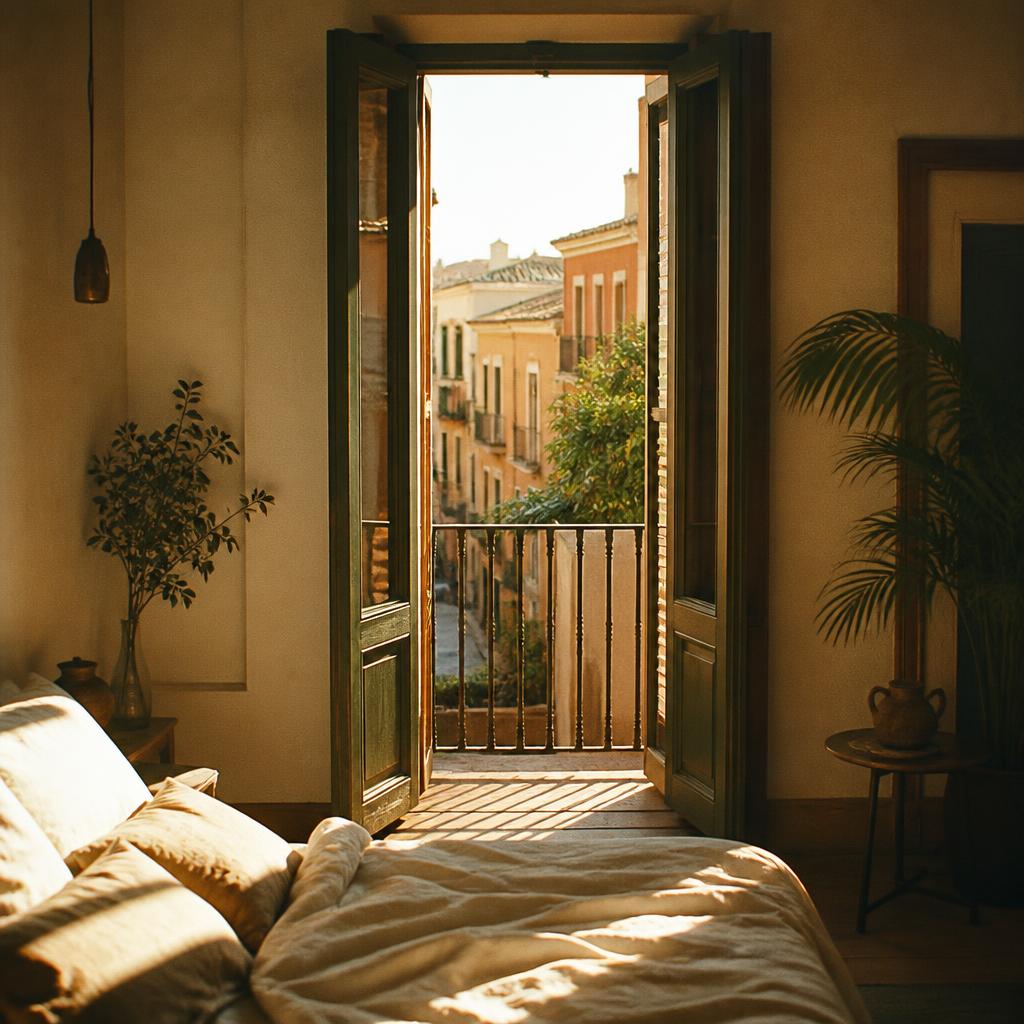
Let's have an honest chat about beds.
Somewhere along the way, "where should I stay" turned into one of the most anxiety-inducing parts of trip planning — right up there with "what if I miss my connecting flight" and "how much cash do I actually need in Vietnam." People spend more time comparing cancellation policies than they spent choosing their actual career. I've watched grown adults have full existential crises over whether a hostel with a 4.2 rating is "good enough," while simultaneously being unable to tell you what city they're flying into.
So here's the truth, and I say this with love: your accommodation is not the trip. It's the twelve-hour intermission between the parts of your day that actually matter — the food, the walk you took by accident, the conversation with a stranger that turned into a friendship, the sunset you almost missed. Where you sleep should support that experience, not become a whole second research project.
But — and this is important — "it doesn't matter" and "it doesn't matter at all" are two very different sentences. A bad choice of accommodation absolutely can wreck a trip. The wrong call isn't "the room was a bit small." It's "I didn't sleep for three nights because the walls were paper and the guy next door snored like a diesel engine," or "I paid hotel prices for a room with a broken lock in a neighbourhood I wouldn't walk through at night."
This guide is the map for getting it right — whichever way you like to travel.
The Quick Answer
There's no single "best" type of accommodation — only the best type for this trip, this budget, and this version of you. But regardless of style or price point, good accommodation always covers four basics: safety, cleanliness, location, and vibe. Get those four right, and you can happily sleep in anything from a 6-bed hostel dorm to a converted lighthouse. Get them wrong, and no amount of thread count will save you.
The Three Ways WanderSparks Approaches Accommodation
Over enough trips, most travellers land in one of three camps — and honestly, a lot of us rotate between all three depending on the trip, the season, and how our bank account is feeling that month.
1. Save Mode — Spend Almost Nothing, Sleep Just Fine
This is the philosophy of travellers who'd rather put their money into flights, food, and experiences than a fancy bed. It's dorms, budget guesthouses, and the kind of places where you make friends over a shared kettle. Done right, it's not "roughing it" — it's strategic.
Read the full guide: How to Save Money on Accommodation Without Sacrificing Sleep, Safety, or Sanity (coming soon).
2. Splurge Mode — Accommodation as Part of the Adventure
Sometimes the hotel isn't where you sleep between the "real" travel — it is the travel. A converted monastery in Portugal. A treehouse in Laos. A hotel so architecturally unhinged it should have its own Wikipedia page. This is for the nights you want to remember for the room, not despite it.
Read the full guide: Beautiful, Bizarre & Brilliant: Hotels Worth Booking For Themselves (coming soon).
3. Sweet Spot Mode — Your Own Room, Without the Overspend
This is the most underrated lane in travel accommodation, and arguably where most people should actually be living most of the time. Private room, real privacy, a lock that works, decent location — without paying resort prices for it. Think boutique guesthouses, well-reviewed private rooms in hostels, small independent hotels, and well-chosen apartments.
Read the full guide: The Sweet Spot: How to Get Privacy and Comfort Without Overpaying (coming soon).
And Because None of This Matters If You're Overpaying
Read the full guide: Where to Actually Find the Best Accommodation Deals, Discounts & Cashback (coming soon).
The Four Non-Negotiables (No Matter Your Budget)
You can travel on £15 a night or £500 a night and still get these wrong. Here's what to check every single time, regardless of style:
- Safety — Look for a 24-hour reception or lockbox, reviews mentioning the neighbourhood specifically (not just the room), and a door with a lock that isn't decorative. A quick scroll through recent reviews (last 3 months, not the property's greatest hits from 2019) tells you more than star ratings ever will.
- Cleanliness — Not "spa-level," just genuinely clean. Photos from guests (not the listing) are the most honest source you'll find. If ten reviewers mention bed bugs, believe the ten reviewers.
- Location — A cheap place 45 minutes from anything isn't actually cheap once you add transport, time, and the taxi you'll inevitably take back at 11pm. Price in the location, not just the room rate.
- Vibe — This is the one people skip and shouldn't. A silent boutique hotel and a party hostel are both "good accommodation" — for completely different trips. Book for the traveller you are on this trip, not the one you were three years ago (or wish you were).
Hostel vs Hotel vs Guesthouse vs Apartment: The Honest Comparison
*Prices are rough 2026 averages and vary hugely by destination, season, and how far in advance you book. As a reality check: a "regular," entirely unremarkable mid-range hotel in Paris already averages €165–212/night — so anything genuinely special or design-forward should be priced well above that, not around it.
| Type | Best For | Typical Price* | Privacy | Social Factor | Watch Out For |
|---|---|---|---|---|---|
| Hostel dorm | Solo travellers, backpackers, meeting people | $15–$65/night (cheap regions from $8; Paris/Milan/NYC top-rated dorms $50–$65) | Low | Very high | Noise, light sleepers struggle |
| Hostel private room | Solo/couples wanting the sweet spot | $35–$120/night | Medium–High | Medium | Shared bathrooms still common |
| Guesthouse / B&B | Couples, culture-seekers, small-town stays | $40–$100/night | High | Medium | Fewer amenities, often no 24h desk |
| Budget hotel | Comfort-first travellers on a tighter budget | $50–$120/night | High | Low | Can be soulless; location varies wildly |
| Mid-range hotel | The "sweet spot" seeker, most travellers most of the time | $110–$220/night (major Western European/US hubs sit at the top of this) | High | Low–Medium | In Paris, NYC, or Zurich, this is the normal price — not a splurge |
| Apartment/Airbnb | Longer stays, digital nomads, groups | $50–$200/night | Very High | Low | Cleaning fees, inconsistent standards |
| Design/unique hotel | Experience-seekers, the trip-is-the-destination crowd | $220+/night, often $300–$600+ for genuinely special properties | Very High | Low | Easy to overpay for aesthetics alone |
What Should You Actually Budget for Accommodation?
A workable rule of thumb: accommodation should be roughly 25–35% of your daily trip budget if you're travelling mid-range, less if you're in save mode, more if a stay is genuinely part of the experience (see: Splurge Mode above). But the honest, non-brochure version is that "budget" and "mid-range" mean wildly different numbers depending on where you are:
- Cheaper regions (much of Southeast Asia, Central America, parts of Eastern Europe): a genuinely good private room runs $15–$35/night, and a properly nice boutique stay can still land under $80.
- Expensive Western European and North American hub cities (Paris, Milan, New York, Zurich, London): dorm beds in well-reviewed hostels routinely hit $50–$65/night, and a completely ordinary, nothing-special mid-range hotel already averages $170–$220/night. This is worth knowing before you go, because it recalibrates what counts as a "splurge" — in Paris, €150 a night gets you an unremarkable room, not a treat.
The takeaway: the same word ("mid-range," "boutique") buys very different experiences depending on the city, so always check current local pricing before setting your budget — don't assume a number that worked in Lisbon will work in Zurich. This is exactly why deal-hunting (see the fourth guide above) earns its keep the most in pricey destinations.
Mistakes That Quietly Ruin Good Trips
- Booking based on photos alone. Photos show the best five minutes the room has ever had. Reviews show the other 364 days.
- Ignoring the map pin. "Central" is doing a lot of heavy lifting in some listings. Actually check the walk time to things you care about.
- Assuming a private room in a hostel is the same as a hotel room. Sometimes yes, sometimes it's a dorm with a curtain. Read the fine print.
- Not checking cancellation policy before prices spike closer to the date. Free cancellation now, decide later, is one of the most underused travel hacks that exists.
- Overcorrecting after one bad experience. One noisy hostel doesn't mean hostels are "bad" — it means that one had thin walls. Don't let a single Tuesday in Prague dictate your entire travel style for the next decade.
When to Book (and Why "Last Minute" Isn't Always the Flex People Think)
For popular destinations in peak season, book 4–8 weeks ahead for the best combination of price and choice. For shoulder season or less-touristed spots, 1–2 weeks ahead usually works fine, and last-minute deals genuinely appear. The exception: major events, festivals, and anywhere with limited beds (small islands, remote towns) — book those as early as you can stomach, because "I'll just find something when I get there" turns into "I'm sleeping in a bus station" faster than you'd think.
The Bottom Line
Your accommodation doesn't need to be the star of your trip — but it should never be the villain of it either. Nail safety, cleanliness, location, and vibe, and you've got total freedom to choose your own adventure: dorm bed, design hotel, or the sweet spot in between. The rest of this series digs into exactly how to do each one well — and how to pay less for all of it.
Frequently Asked Questions
Is it better to book a hostel or a hotel?
Neither is objectively better — it depends on your trip. Hostels tend to win for solo travellers on a budget who want to meet people; hotels and private rooms win for comfort, privacy, and predictability. Many experienced travellers mix both across a single trip.
How much should I spend on accommodation per night while travelling?
As a starting point, budget travellers typically spend $10–$35/night, mid-range travellers $40–$100/night, and those prioritising unique or luxury stays $150+/night — though this shifts significantly by destination. In hub cities like Paris, NYC, or Zurich, an ordinary mid-range hotel already averages $170–$220/night, so recalibrate your expectations accordingly.
Is it safe to stay in hostels?
Yes, the vast majority of hostels are safe, especially those with 24-hour reception, lockers, and consistently good recent reviews. Read reviews from the last few months specifically, and trust your gut on neighbourhood and entrance safety after dark.
What's more important: price or location?
Location, almost every time. A slightly pricier stay in a well-located, walkable area usually saves you more in time, transport costs, and stress than a cheaper option far from everything.
How far in advance should I book accommodation?
4–8 weeks ahead for peak season or popular cities; 1–2 weeks is often fine in shoulder season. Book earlier for festivals, islands, or anywhere with genuinely limited beds.
Keep exploring
Stories, places and books to keep the daydreaming going.
How to Save Money on Accommodation Without Sacrificing Sleep, Safety, or Sanity
Travel Tips · 8 min read
Read the story

Night Train to Lisbon
by Pascal Mercier · Lisbon, Portugal