
A Week in Paris: How to Slow Down and Actually Enjoy It
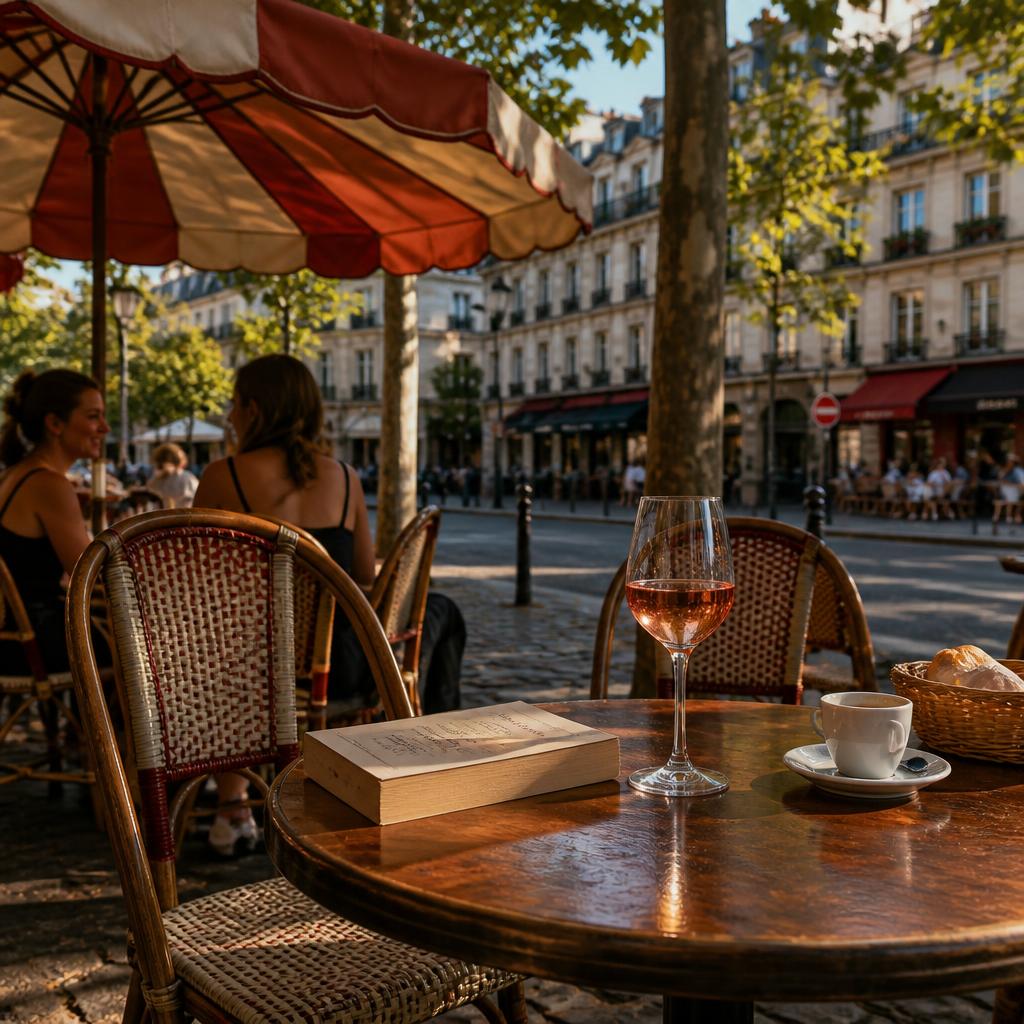
You know the Paris trip everyone warns you about. Forty-eight hours, one suitcase you never fully unpack, and an itinerary so dense it should legally require a hard hat. Eiffel Tower at dawn, Louvre by 10, Montmartre by lunch, Versailles 'if there's time' (there is never time), and a nightly collapse into bed muttering something about your feet.
You come home with a phone full of blurry photos of the Mona Lisa's back of head, viewed over forty strangers' phones, and a nagging sense that you saw Paris the way you'd see a city through a train window doing 200 km/h.
Here's the good news: if you've got seven days instead of two, you get to do something most visitors never try. You get to actually live there for a week — same boulangerie, same café table, same grumpy-but-secretly-fond waiter — instead of just collecting it. That's the whole idea behind slow travel, and Paris, weirdly, might be the single best city in the world to practise it in. It rewards repetition. It punishes rushing. It was basically designed for people who'd rather know one café intimately than photograph ten.
This is that itinerary. One base, one or two arrondissements, deliberately empty afternoons, and just enough structure that you don't accidentally waste your one trip to the Louvre standing in the wrong queue.
Who This Itinerary Is For
This isn't the 'see everything Paris has ever produced' itinerary — that one exists, and it's exhausting on purpose. This is for you if:
- You have 6–8 days and would rather see two neighbourhoods properly than ten badly.
- You're travelling solo, as a couple, or with one easy-going friend (group slow travel is a different, harder beast).
- You've done the whirlwind European city-hop before and came home needing a holiday from your holiday.
- You want fewer 'must-sees' and more 'actually understood the place' by day seven.
- You're a remote worker, a long-weekend-turned-real-trip type, or just someone who resents being rushed on holiday (fair).
Step One: Pick One Base, Not a Suitcase on Wheels
The biggest slow-travel decision happens before you land: where you sleep. Choose one apartment or hotel for the full week, ideally in or near a single neighbourhood you actually want to get to know, rather than hopping between areas for 'convenience.'
A few bases that work brilliantly for a week:
- The Marais (3rd/4th arrondissement) — walkable, full of independent shops, falafel and pastry in equal measure, close to the Seine on both sides. Best for first-timers who want everything within a 20-minute walk.
- Saint-Germain-des-Prés / Latin Quarter (6th/5th) — bookshops, café culture, the Luxembourg Gardens as your daily park. Best for the 'I want to feel like I live here' fantasy.
- Canal Saint-Martin (10th) — younger, more local, less postcard-pretty and more lived-in. Best for budget travellers and anyone who's already done the Eiffel-Tower-view-from-my-window trip.
Book an apartment with even a basic kitchen if you can. Picking up eggs, cheese, and a still-warm baguette from the same shop three mornings running sounds like a small thing. It is, in fact, one of the best things you will do in Paris.
Day-by-Day: A Week That Doesn't Feel Like a Race
This isn't hour-by-hour — that's the whole point — but here's the shape of a week that balances 'see the famous things' with 'leave room to wander.'
Day 1 — Arrive and Do Absolutely Nothing Useful
Drop your bags, walk to the nearest boulangerie, and get a pastry you can't pronounce. Walk along the Seine with no destination. Go to bed early. Jet lag and ambition are a bad combination — don't fight it.
Day 2 — Your One Big Museum Day
Pick one major museum and give it real time: the Louvre or the Musée d'Orsay, not both. Book your free timed-entry slot in advance — both venues require it, and showing up without one means you don't get in, pass or no pass. Spend the afternoon recovering with a long lunch nearby instead of rushing to a second museum.
Day 3 — Neighbourhood Day
No big sights. Walk your chosen arrondissement properly: the market, the side streets, a park bench with a book. This is the 'nothing day' the slow-travel philosophy insists on, and by day three your legs will thank you for it.
Day 4 — The Icons, Efficiently
Eiffel Tower (book ahead, go at golden hour for the view and the light), then Trocadéro for the photo everyone actually wants. One major sight, done properly, beats three done at a jog.
Day 5 — Day Trip (Optional)
If you want to leave the city, this is the day. Versailles is the obvious choice — give it a full day, not a rushed half-day, because the gardens alone deserve hours. If châteaux aren't your thing, a regional train to a smaller town (Chartres, Giverny in season) makes a gentler day trip.
Day 6 — Repeat Yourself on Purpose
Go back to the café from Day 1. Order the same thing. Notice what's different about how it feels now that you (sort of) know the block. Visit a second, smaller museum if you're craving it — the Musée Rodin or the Musée de l'Orangerie are both excellent and far less punishing than the Louvre.
Day 7 — Slow Morning, Slow Goodbye
Save your last morning for nothing in particular. A final pastry. A final walk along your stretch of the Seine. This is the day you'll actually remember — not the queue at the Eiffel Tower, but the quiet Tuesday morning that felt, briefly, like yours.
Getting Around for a Week: What Pass Actually Makes Sense
For a week-long stay, your transport math looks different than it does for a 2-day trip, and getting this wrong is an easy way to overpay.
| Option | Cost (2026) | Best for |
|---|---|---|
| Single Metro/RER ticket | €2.55 | Occasional rides only |
| Navigo Day Pass | €12.30/day | Heavy single-day sightseeing, no airport access |
| Navigo Découverte (weekly) | €32.40 + €5 card fee | Most week-long stays — unlimited travel, all zones |
| Navigo Easy card | €2 (reloadable) | Flexible occasional use, holds multiple ticket types |
| Paris Region ↔ Airports ticket | €14 flat | CDG (RER B) or Orly (Metro 14) transfers |
For most travellers staying six or seven days, the weekly Navigo Découverte is the obvious pick: one card, unlimited metro/RER/bus travel across all zones, and it pays for itself well before day five. You'll need a small passport-style photo for the physical card, so have one ready or take a digital one at a station photo booth.
One genuinely useful 2026 update: the old paper carnet tickets are gone, and magnetic tickets are being phased out entirely by June 2026, so plan to use a Navigo Easy card, the weekly pass, or your phone via the Île-de-France Mobilités app rather than relying on cash-bought paper tickets.
Paris Museum Pass: Worth It for a One-Week Trip?
Short answer: usually yes, if you're visiting four or more major sites. As of 2026, the pass costs €85 for 2 days (48 hours), €105 for 4 days (96 hours), or €125 for 6 days (144 hours), and covers 50+ museums and monuments including the Louvre, Musée d'Orsay, the Palace of Versailles, Sainte-Chapelle, and the Arc de Triomphe.
The maths, roughly:
- Louvre alone: ~€22 for EEA citizens/residents, ~€32 for other visitors
- Musée d'Orsay: ~€16
- Versailles: ~€25–35 depending on season
- Sainte-Chapelle: ~€22
- Arc de Triomphe: ~€17
Hit even three or four of those and you're close to or past the cost of the pass. Note that the Louvre introduced two-tier pricing in 2026 — €22 for EEA citizens/residents and €32 for other visitors — which applies to the Louvre specifically, not to Paris museums generally.
The catch that trips people up: the pass gets you in, but it doesn't book you a time slot. Even with the Museum Pass, a free timed reservation is still required for the Louvre, Musée d'Orsay, the Palace of Versailles, and Sainte-Chapelle. The Arc de Triomphe does not require a reservation. Book those slots the moment you commit to your dates, especially the Louvre — they vanish fast in high season.
Palace of Versailles: requires a mandatory free timed reservation (book the "Passport" ticket option for Museum Pass holders). Trianon Estate: no reservation needed. On Musical Fountains Show / Musical Gardens days (weekends, April–October), garden access typically requires a separate paid ticket not covered by the pass.
If your slow-travel week only includes one or two big sites and a lot of wandering (which, frankly, is the whole point of this itinerary), skip the pass and buy individual tickets. The pass rewards checklist energy, and you're specifically here to avoid that.
What a Slow Week in Paris Actually Costs
A rough daily budget for one person, mid-range, for the week:
- Accommodation: €80–150/night for a decent apartment or 3-star hotel in a central arrondissement (often cheaper per night than two separate 2-night stays, since you avoid the 'tourist premium' some hotels charge for short stays).
- Food: €30–50/day if you mix boulangerie breakfasts, market lunches, and one proper sit-down dinner.
- Transport: ~€37 total for the week (Navigo Découverte + card fee), plus €28 if you're doing both airport transfers.
- Sights: €0–125 depending on whether the Museum Pass makes sense for your plans.
A slow week often costs less per day than a fast 3-day trip, because you're not paying transfer fees between hotels, rushing into overpriced tourist-trap lunches near major sights, or booking last-minute skip-the-line tickets at a markup out of sheer panic.
A Few Honest Notes Before You Go
- ETIAS isn't required yet. The EU's new travel authorisation system has been delayed multiple times and is currently expected in the last quarter of 2026, with a six-month grace period after that. For now, visa-exempt travellers (US, UK, Canada, Australia, and others) can still enter France as usual — no extra paperwork. Check the official ETIAS site closer to your travel date, since the launch has slipped before.
- August is quieter, not better. Many Parisians leave the city in August, which means some small restaurants close — but it also means shorter queues everywhere else. Worth knowing if you're choosing your week.
- A week is not 'going native.' You're a visitor with a really good week, not a local. Be a polite one: a 'bonjour' before any request goes a long way, and tipping is appreciated but not obligatory the way it is elsewhere.
Frequently Asked Questions
Is a week too long for Paris?
No — most visitors who try a full week find it's the first time Paris feels properly explored rather than glimpsed. The city has enough texture in food, neighbourhoods, and day trips to easily fill seven unhurried days.
Should I stay in one neighbourhood the whole week?
Ideally yes, or at most two. Moving accommodation mid-week eats time and money you could spend actually being there, and staying put is what makes the 'regular at the café' feeling possible.
Do I need the Museum Pass for a slow week?
Only if you're planning four or more major paid sites. A genuinely slow week often involves one or two big museums and a lot of neighbourhood wandering, in which case individual tickets are cheaper.
What's the best month for a slow week in Paris?
Late spring (May–June) and early autumn (September–October) offer good weather without peak summer crowds and pricing. August is quieter but some local businesses close.
How much walking is involved?
A lot, by design — that's how slow travel works in a city this walkable. Comfortable shoes matter more than any outfit decision you'll make for this trip.
Keep exploring
Stories, places and books to keep the daydreaming going.
First Solo Trip? Here's Where to Start (+ the Plan That Actually Works)
Travel Tips · 12 min read
Read the story

The Little Paris Bookshop
by Nina George · Paris & Provence, France